
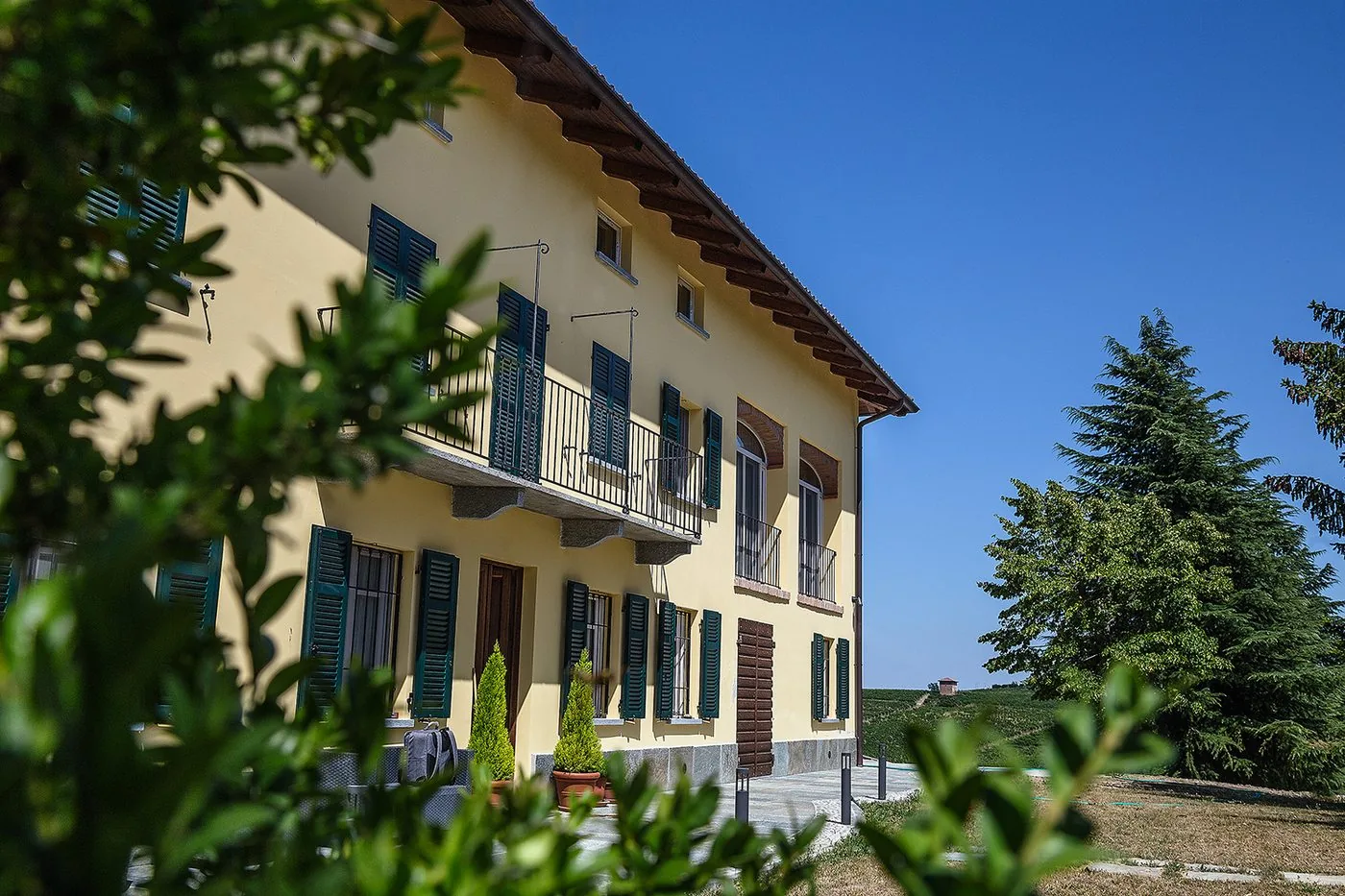
Renovation of a historic farmhouse in Alto Monferrato
Vivere in un sito UNESCO
Bringing back to light the identity of a nineteenth-century farmhouse, recovering materials and architectural features that the transformations occurred over time had progressively hidden.
Vivere in un sito UNESCO is a renovation project of a farmhouse of about 600 m² in Alto Monferrato, set in the vineyard landscape recognised as a UNESCO World Heritage Site.
The project was born from the client's wish to give new life to the building and transform it into a contemporary residence, while preserving the memory, the materials and the character of the original architecture.
The project
The farmhouse, dating back to the nineteenth century, had undergone several alterations over the years that had progressively modified and hidden some of its original features.
The project therefore started from a careful reading of the existing building: understanding what to preserve, what to recover and which transformations to introduce to adapt it to the needs of a new residence.
The goal was not simply to renovate, but to rediscover the identity of the farmhouse and bring it back to light through the project.
Rediscovering materials
One of the most fascinating aspects of the intervention was the recovery of the building's original materials and elements.
Surfaces, walls, structural elements and details that time and successive transformations had hidden became an integral part of the new project.
Rather than indiscriminately replacing what belonged to the farmhouse's history, the intervention sought to recover, reinterpret and give new life to the existing materials, connecting them with the new living requirements.
Between memory and new spaces
Recovering a historic building means allowing it to keep on living.
The spaces were therefore rethought to transform the farmhouse into a contemporary residence, keeping the elements that tell its story legible.
The dialogue between what has been preserved and what has been introduced by the project allows the new to coexist with the existing without erasing it.
The result is a home in which past and present do not oppose each other, but become parts of the same project.
Colour and landscape
The integration of the building into the Alto Monferrato landscape was a fundamental element of the project.
A careful study of the colours and external finishes made it possible to rebuild a balanced relationship between the farmhouse and the surrounding territory, preventing the intervention from appearing foreign to the context.
Architecture and landscape thus dialogue once again, within a territory now recognised for its exceptional cultural and landscape value.
From recovery to the new residence
The intervention, carried out between April 2013 and December 2014, involved a complex of about 600 m² with its outbuildings.
The renovation path accompanied the farmhouse from the rediscovery of its original features to the definition of the new residence.
The recovery of materials, the reinterpretation of spaces and the attention to the relationship with the landscape made it possible to transform a building marked by numerous successive interventions into a house once again able to tell its own story.
The result
Vivere in un sito UNESCO is a project in which the value of transformation comes above all from what it was possible to rediscover.
Bringing back to light the materials and features of a nineteenth-century farmhouse made it possible to give the building back its identity and, at the same time, to create a new home for a young family.
An intervention in which recovery, architecture and landscape all contribute to building a new way of inhabiting a historic Monferrato building.
Thinking of recovering a farmhouse in Monferrato?
Every historic building preserves different features, materials and potential. Knowing them is the first step in designing a transformation capable of respecting the existing and adapting it to new needs. Project Works can follow the path from the survey and analysis of the property through to the design and construction of the intervention.
Tell us about your project